
6 Mistakes I've Made as a Beginner eBay Reseller (That Nobody Tells You About)

I've done about 166 sales now.
I'm still a beginner, and I'll say that up front.
There are people on eBay who do my monthly turnover in a few days.
But I've made some mistakes that I think are worth you hearing about, because they're the sort of thing nobody tells you at the start.
They're not the obvious ones either.
Nobody's going to tell you to take better photos here.
These are the eBay reselling mistakes that cost me money, time, or both. And a couple of them I'm still correcting now.
1. I Went to Premium Stock Too Soon
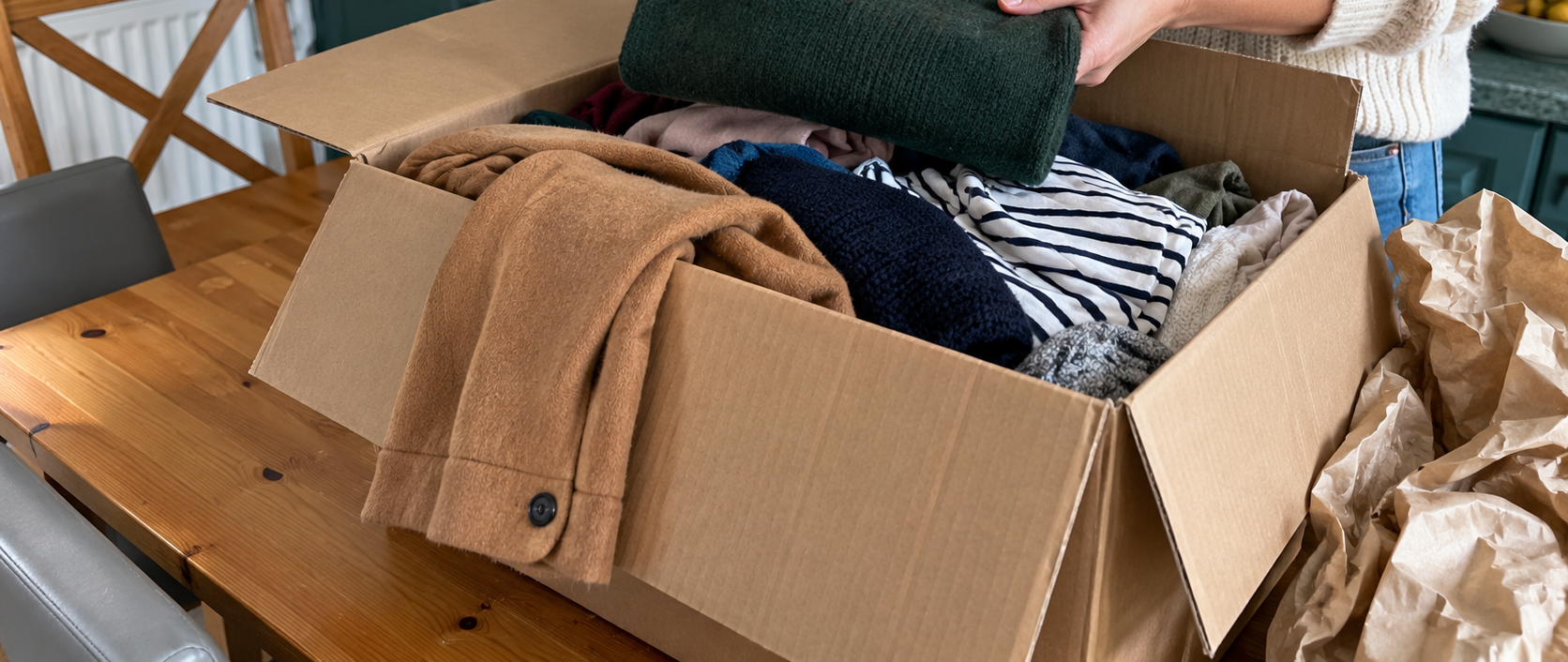
The first thing I did, almost immediately, was buy premium wholesale.
Two hundred quid a box, grade A stock. That was my first two boxes.
Two hundred pounds each, before I'd sold a single item, before I knew what sold, before I knew what my own buyers wanted.
It wasn't bad stock. It was genuinely nice stuff.
The mistake wasn't the quality.
The mistake was that I spent two hundred pounds learning something I could have learned for twenty.
Because at the start, what you're actually buying isn't inventory. It's information.
You're buying the answers to questions like: what do my buyers want, what sells fast, what sits, and what do I enjoy listing?
And you can buy those answers cheaper.
What I do now
Shop around the wholesalers. Properly.
Get on different ones, order small and compare what turns up. They're wildly different from each other, and the only way to know is to try a few.
It surprised me, but I actually prefer the cheaper wholesale stock. Anywhere from 20p to 50p an item. That's my bread and butter now.
Think about what that does to your risk.
If an item doesn't sell, I've lost pennies. I can afford to be wrong with that stock.
Then for my premium pieces, the ones that make a decent margin and pull my averages up, I source them myself on Vinted. I pick each one individually, so I know exactly what I'm getting and what it's worth.
So it's two completely different approaches running side by side.
Cheap bulk wholesale: for volume and for learning
Hand-picked premium from Vinted: for margin
I got there eventually.
I just paid four hundred quid for the privilege of working it out.
2. I Copied Everybody Else's Storage
When I started, I used rails and small boxes.
Because that's what everybody else was doing. Every reseller video I watched had a rail in the background, so I got rails.
They were wrong for me. Completely wrong.
I have OCD, and part of that is contamination OCD.
Practically, that means no matter when an item came in or how it was stored, when it sells I'm getting it out, airing it and steaming it fresh before it goes anywhere near a parcel.
That's going to happen. It's not negotiable for me.
Once I clocked that I'm re-treating every single item at the point of sale anyway, a load of the standard advice just stopped making sense.
Bagging everything in poly bags at the storage stage? No point. That's money spent on plastic to protect something I'm going to redo regardless.
Rails? They take up an enormous amount of floor space for the number of items they hold, and everything's exposed to dust and light. In a 180-year-old cottage, that's not a small consideration.
What I use now
Big black 100-litre storage boxes, stacked on top of each other.
Everything washed going in. No bags. Stacked floor to ceiling.
That's the dream, anyway. I'm redoing my storage system box by box.
And beyond the space, if I ever get a premises or convert one of the outbuildings here, which I'm thinking about, my entire inventory is already in transportable units. I pick them up and move them. Nothing to dismantle, nothing to rebag.
But the real lesson isn't "use big boxes".
Work out your constraints first, then build the system.
My constraints are an old cottage, no car and OCD. Yours will be completely different.
Don't buy rails just because the person on YouTube has rails.

3. I Didn't Decide What Kind of Business I Was Building
This is the big one. If I were ranking these by cost, this would be first.
I didn't decide what kind of business I was building before I started building it.
Because there are broadly two, and they pull in opposite directions.
The quantity business
Low-cost stock, high listing count. You want 5,000-plus listings and somewhere to put 5,000 items.
Your margin per item is small, and you make your money on volume and turnover.
This business lives or dies on how fast you can list and how much space you have.
The premium business
Fewer listings, say 1,000 good ones live at any time, but proper brands and proper margins.
You spend your time sourcing and researching rather than listing. You need less space and more knowledge.
These need different stock, different storage, different amounts of your day and, honestly, different personalities.
I didn't pick. I just started, drifted, and ended up doing bits of both badly before working out where I actually wanted to be.
And are you going to do lives?
That's a whole different operation again. Different setup, different schedule, different skills.
You don't have to decide now, and it can change. But have a view on it, because it affects what you buy and how you store it.
I'm still learning this myself. If I like doing lives, my business becomes premium plus lives. If I don't, it becomes a quantity business with a few premium pieces, about 80/20.
What I don't want is to run a quantity business and try to keep up with lives too.
4. Relying on eBay Alone (This One Isn't Mine)
This isn't a mistake I made, because of where I've come from. But I see it constantly, and I think it's the most useful one here.
If you're an eBay seller, especially one who makes content about it, you should have other income streams.
I don't mean that in a hustle-culture way.
I mean it in a "platforms change their rules and you have no say in it" way.
eBay can change its fees or its search algorithm. If you're on Vinted, there seems to be trouble with resellers every couple of weeks. It's your whole livelihood, decided by one huge company.
My background before this was digital products. I'm maybe five steps ahead of a beginner there, with so much still to learn, but I love it, and it's why I came into reselling already thinking about what sits alongside it.
What can sit alongside reselling
Digital products: templates, guides, planners and the tools you've built for your own business that other people would pay for
A Skool community: if teaching is your thing
An ebook: including one most people never think of, your own story with reselling as the frame
Affiliate income: if you're recommending things you genuinely use
A blog
Your YouTube channel itself, eventually
I think a reselling business can comfortably carry four or five income streams around it.
And I think the reselling gets better when it does, because you're not making desperate stock decisions to cover a bill.

5. Comparing Myself to Bigger Resellers
This one's more in your head than in your business, but it does real damage.
What works for a reseller with fifty thousand followers might not work for you.
And when it doesn't, it's so easy to decide the problem is you.
I've done it. You watch someone say they're getting a 20% sell-through rate, yours is 5%, and something in your chest just sinks.
Right. I'm not cut out for this.
A few things to remember
Some of those numbers are exaggerated. Not all, not even most, but some. Nobody's audited, and sell-through rate gets calculated six different ways depending on what makes the person look best
Some are completely true and completely irrelevant to you. That person has a different niche, market, stock source, experience and amount of time
Some of it is just scale and time. Processes that work at 5,000 listings genuinely don't work at 200, and the other way round
So take ideas from other people. Absolutely do.
But take them as ideas. Try them. Keep what works in your house, with your stock, in your life. Bin the rest.
That goes right down to the small stuff. Your packaging, your storage, what time of day you list, which hangers you use.
None of it is right or wrong. There's just a version that works for you.
6. Treating My Niche Like a Fence
This one's a bit nuanced, because I haven't changed my mind.
I still think a main niche is the way to go.
People are more likely to buy from you again when they know what you are. If somebody buys a dress from you and likes it, they'll look at your other listings, and if your shop makes sense, they'll buy again.
Repeat buyers are the cheapest sales I'll ever get.
But I'd started treating my niche as a boundary rather than a base. That was the mistake.
What changed my mind: menswear
I'd heard people say menswear sells much better than womenswear, and I wanted to know if that was actually true, so I went and looked.
It's not that men buy more. It's that there's far less supply.
For example, Depop had 30.9 million women's clothing items listed against 13.6 million men's. Less than half.
And when supply is small against demand, things just move. A few resale platforms have found men's items sell in roughly half the time women's do.
eBay specifically rewards that kind of stock. It favours searched-for inventory, like menswear, workwear, vintage and hard-to-find sizes, while trend-led womenswear in the £20 to £40 bracket tends to do better on browsing apps like Vinted.
Which, when I read it, explained quite a lot about my own numbers.
So I'm going into menswear now. Not instead of womenswear, which is still my core, but alongside it.
I'm also looking at adding some gift lines to that section of my shop, which is another thing I'd have told myself not to do six months ago.
So here's where I've landed.
Have a niche, because it builds repeat buyers and keeps your sourcing focused.
But don't let it stop you testing things. Research categories. Follow the gaps in supply.
Why limit yourself when you don't have to?

The Six Mistakes at a Glance
Buying premium stock too early
Copying somebody else's storage
Not deciding what kind of business I was building
Relying on one platform
Comparing myself to people years ahead of me
Treating my niche like a fence
Six mistakes.
Four hundred quid in premium boxes.
And a lot of big black storage tubs.
A Little Note About My Images ♡
You'll notice that the images across my blog are a mixture of my own photography and AI-generated images.
I'm a one-woman band running this little corner of the internet, without a team of photographers, designers or editors behind me. Living with OCD also means I can be particularly careful about things like copyright and image permissions, so I sometimes use AI to help bring my ideas to life without those additional worries.
Where possible, I love sharing my own photographs, especially glimpses of my cottage, garden and everyday life here in Scotland. Other times, I'll use AI-generated imagery to illustrate an idea or provide a little creative inspiration.
I believe in being transparent, so I wanted you to know that you'll find a mixture of both throughout my website. The words, experiences, opinions and ideas are my own.
Thank you for supporting my little one-woman blog! ❤️


Comments