
Why My Autumn Wardrobe Is Preloved

The Hobbs coat came up on my screen at £3.60.
Camel wool, barely worn, original price around £89. I bought it to resell, photographed it. That is the version of how my preloved autumn wardrobe gets built: I am an eBay reseller, I acquire things to sell, and occasionally I acquire things for myself and pretend otherwise.
I don't drive, I don't eat meat, and until recently I worked with far more AI tools than I do now. I've pulled back on that too. So when I say the wardrobe is a values thing, I mean it has to be consistent with how I handle everything else, not just clothes.

Why preloved and not just secondhand?
There is something in the word itself. Second-hand sounds like a consolation. Preloved sounds like the coat had a good life before you.
I know that's a distinction most people would roll their eyes at. But language does work, and "preloved" carries a different register: more considered, more voluntary.
Less "this is all I could afford" and more "I looked, I chose this specifically."
The shift is measurable. According to ChannelX reporting on eBay UK data from August 2025, 77 per cent of eBay customers say buying preloved has become more common in their purchasing habits over recent years.
That figure is now mainstream enough that brands have started using the word themselves, which is either encouraging or a sign it'll be ruined within eighteen months.
My preloved autumn wardrobe didn't start as a statement. It started because good wool coats cost £100 new and I resent that.
What buying preloved actually costs
A Burberry trench coat retails at around £1,500 new. You can pick one up for £85.
A cashmere jumper from Pure Collection sits at roughly £180 on their site. Preloved, in good condition, you're looking at £55 on eBay. A pair of leather ankle boots from Clarks will run you £90 new. You can get them on eBay for £35.
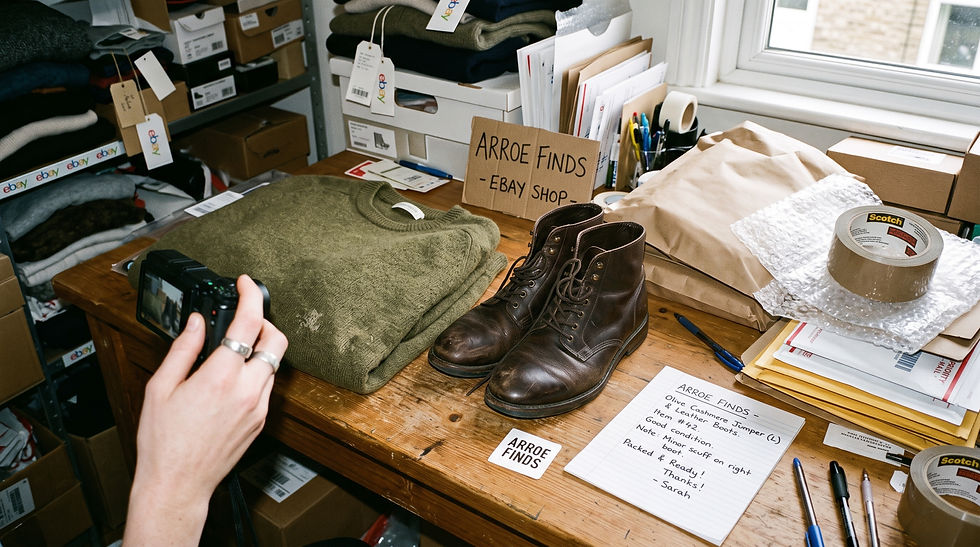
The time cost is real, though. Photographing stock, writing descriptions, checking seams and linings. I run my own shop at arroefinds on eBay, and the reselling side is what funds most of the buying. Things I find that aren't my size or my taste go up as listings. It covers the next haul.
The problem: finding autumn pieces that aren't tired.
October is the worst time to walk into a charity shop looking for autumn clothes. Everyone else had the same idea, and they got there first.
Seams are the tell. If the stitching at the shoulder is pulling or the lining is starting to separate, put it back. A wool coat that's been stored badly will smell of it, and that smell does not wash out easily.
I handle preloved stock daily, which helps. I know which fabrics hold up (wool, cord, leather) and which don't (anything labelled "boucle-effect" on a fast-fashion ticket).
Avoiding the October rush means sourcing earlier, through car boots and eBay rather than the high street shops where everyone descends at once.
Not driving limits where I can go, but it also keeps the whole thing coherent. The wardrobe choice fits the rest of how I live.
How to shop for preloved clothes on eBay
Search by material, not by trend. "Wool coat" finds more than "autumn coat". "Cord shirt women" finds more than "vintage shirt". The algorithm rewards specificity, and so does the stock.
If you want to buy preloved clothes on eBay, women's categories are worth filtering by condition first: "used, like new" and "used, good" will cut out the pilled disasters before you've loaded twenty photos.
Check seller feedback, but look at the number of transactions, not just the percentage. Ninety-seven per cent from twelve sales tells you very little.
"Bundle" in the search pulls up job lots, which is where I find most of my better cashmere. Sellers clearing wardrobes often price badly in their favour. That's fine by me.
One thing I've stopped doing: searching by colour. Browns dominate autumn listings regardless of quality. Search by fibre, filter by condition, and let the colour be a happy accident.
What about the planet?
The fashion industry generates around 92 million tonnes of textile waste every year, according to the Ellen MacArthur Foundation. That number is large enough to lose meaning, which is probably why it hasn't stopped anyone.
I don't drive, I don't eat meat - I haven't for almost 4 years or fish now, I've gone fully vegetarian recently and I keep my AI use to a few queries and some listing code. The wardrobe fits the pattern. It isn't a standalone act of conscience; it's the obvious next thing when you're already thinking about where stuff ends up.
I still buy new socks, because preloved socks are a line I have not crossed and probably won't. New knickers too, for the same reason. These are small surrenders and I'm at peace with them.
Everything else, I'd rather find it already worn, already made, already existing in the world. There's enough of it out there.

Start with one piece
Search for a wool coat this week. Type "wool coat" into eBay, filter by Used, set your size, and see what comes up.
Cord shirts are worth a look too. A good one costs less than a round of drinks, and a quality cord shirt from the nineties outlasts anything made now.
Building a preloved autumn wardrobe does not have to start with a plan. It starts with one search, one item, one seller whose feedback you check before you buy.
If you're not sure where to begin, my eBay store is at arroefinds. The autumn stock turns over fast once September arrives, and I photograph everything before it lists.
The last coat I bought for myself was a plum wool blazer, £12, from a seller in Shropshire. It arrived folded in brown paper with a handwritten note that said "hope you love it as much as I did."
Now that's pretty cool.


Comments