
20 Robert Burns Quotes for Burns Night (And What They Actually Mean)

Every 25th of January, Scotland stops for a poet.
There's haggis, there's whisky, and there's always someone reading out a poem in a voice they only use once a year.
I think it's one of the loveliest nights of the whole winter.
January is long and dark up here.
So a whole evening built around poems, toasts and good company feels like exactly the right idea.
The trouble is, Burns wrote in Scots.
And half the time, people are quoting lines they don't fully understand.
So here are 20 Robert Burns quotes for Burns Night, with what they actually mean in plain English, so you can read them out with confidence.
Who Was Robert Burns?
Robert Burns was born in Alloway, in Ayrshire, on 25 January 1759.
He was a farmer's son who grew up working the land, and he wrote poems and songs in the language people actually spoke.
He died in Dumfries in 1796, aged just 37.
A few years later, in 1801, his friends held the first Burns Supper in his memory.
And Scotland has been doing it ever since.
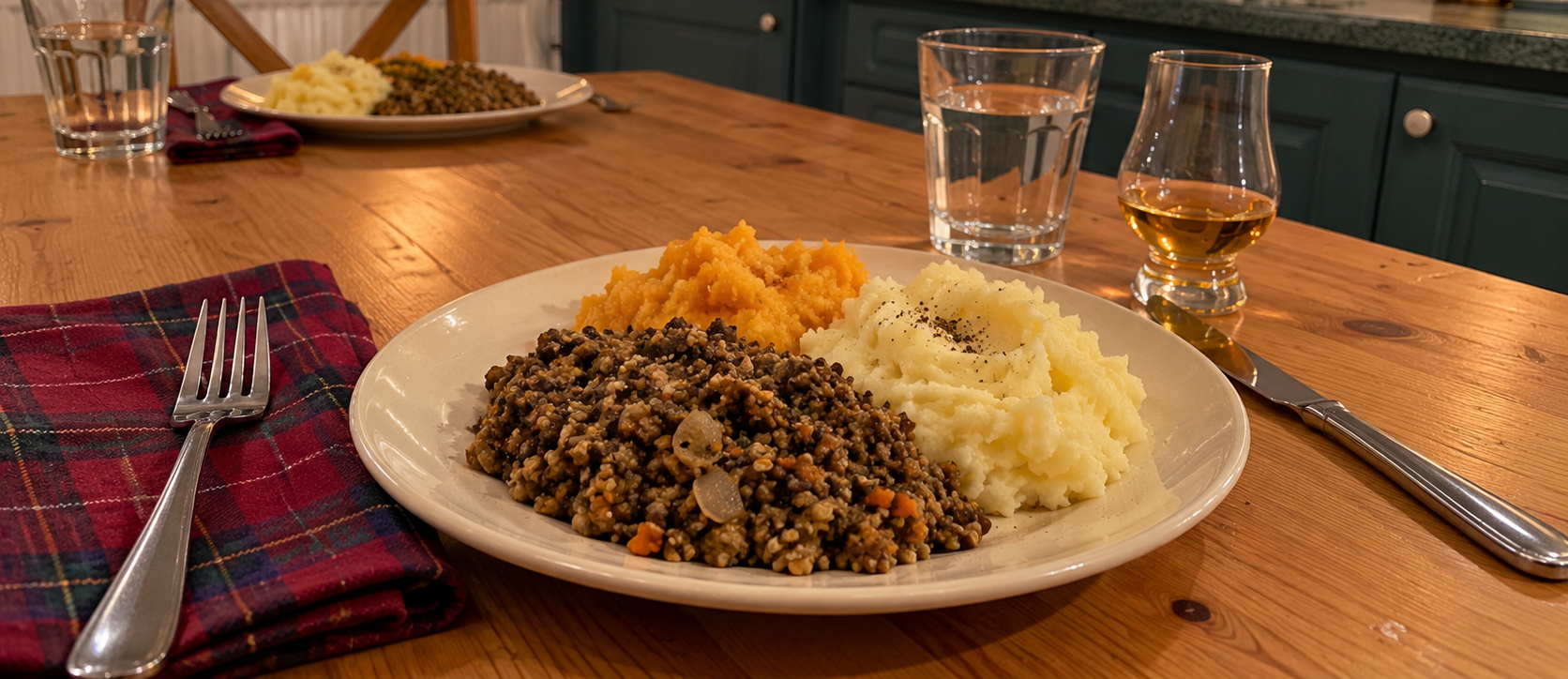
A traditional Burns Night has the Selkirk Grace, the haggis piped in, the Address to a Haggis, a few toasts and plenty of poems and songs.
Most of these quotes fit somewhere in that evening.
Quotes for Burns Night Itself
1. The Opening of Address to a Haggis
“Fair fa’ your honest, sonsie face, / Great chieftain o’ the puddin-race!”
From Address to a Haggis, 1786
This is the line everyone waits for.
"Fair fa'" means good luck to you, and "sonsie" means cheerful or plump.
So Burns is basically wishing the haggis well and calling it the king of all puddings.
It's meant to be read with a lot of drama.
The more serious your face, the funnier it is.
2. The Selkirk Grace
“Some hae meat and canna eat, / And some wad eat that want it; / But we hae meat, and we can eat, / Sae let the Lord be thankit.”
From The Selkirk Grace, traditionally attributed to Burns
Some people have food but can't eat it, and some could eat but have nothing.
We have both, so thank God for it.
It's said before the meal at almost every Burns Supper.
Four lines, and it says everything a grace should.
I think it's one of the loveliest things about the whole night.
3. Scots Wha Hae
“Now’s the day, and now’s the hour”
From Scots Wha Hae, 1793
Burns wrote this as the speech Robert the Bruce might have given his army before Bannockburn.
Out of context, it's a brilliant line for anyone who's been putting something off.
Now's the day.
Rather a good motto for the middle of winter, when everything feels like it can wait until spring.
4. A Toast to Freedom
“Freedom an’ whisky gang thegither!”
From The Author’s Earnest Cry and Prayer, 1786
"Gang thegither" means go together.
Burns wrote this when Scottish whisky was being taxed rather heavily, and he was not impressed.
It's a fun one for a toast, and it always gets a laugh.
Quotes About Love
5. A Red, Red Rose
“O my Luve’s like a red, red rose, / That’s newly sprung in June”
From A Red, Red Rose, 1794
Probably his most famous love song.
It's simple and it's sweet, and it doesn't need translating at all.
It's also a lovely one to keep in mind for Valentine's Day, three weeks later.
6. Ae Fond Kiss
“Ae fond kiss, and then we sever; / Ae fareweel, and then for ever!”
From Ae Fond Kiss, 1791
"Ae" means one, and "sever" means part.
So it's one last kiss, then goodbye forever.
Burns wrote it after parting from a woman he loved, and it's genuinely heartbreaking when it's sung slowly.
Have a hankie ready.

7. John Anderson, My Jo
“Now we maun totter down, John, / And hand in hand we’ll go, / And sleep thegither at the foot, / John Anderson, my jo.”
From John Anderson, My Jo, 1789
"Jo" means sweetheart, and "maun" means must.
It's a wife speaking to her husband after a whole life together.
They climbed the hill of life side by side, and now they'll go down it hand in hand.
Honestly, it's one of the most romantic things he ever wrote.
Not fireworks.
Just a long, quiet life together.
Quotes About Life (and Getting Things Wrong)
8. The Best-Laid Schemes
“The best-laid schemes o’ mice an’ men / Gang aft agley”
From To a Mouse, 1785
"Gang aft agley" means often go wrong.
Burns wrote this after turning up a mouse's nest with his plough, in November, just as winter was coming.
The point is that plans go wrong for all of us, mice and people alike.
It's comforting in a funny way.
Nobody has it all figured out.
9. Seeing Ourselves as Others See Us
“O wad some Power the giftie gie us / To see oursels as ithers see us!”
From To a Louse, 1786
If only some power would give us the gift of seeing ourselves the way other people see us.
The poem is about a very well-dressed lady in church who has no idea there's a louse crawling across her bonnet.
It's Burns at his funniest.
And it's still rather true.
10. Man's Inhumanity to Man
“Man’s inhumanity to man / Makes countless thousands mourn!”
From Man Was Made to Mourn, 1784
This one is more serious.
It means that so much of the suffering in the world is caused by people being cruel to each other.
It's a good one to read quietly, rather than as a toast.
11. Pleasures Are Like Poppies
“But pleasures are like poppies spread, / You seize the flow’r, its bloom is shed”
From Tam o’ Shanter, 1791
The moment you pick a poppy, its petals fall.
Good times are like that too.
You can't hold on to them, so enjoy them while they're happening.
12. Time and Tide
“Nae man can tether time or tide”
From Tam o’ Shanter, 1791
No man can tie up time or the tide.
Living near the sea, I rather like this one.
The tide comes in and goes out whatever you've got planned.
Short, simple and easy to remember.
13. Peace and Rest
“It’s no in titles nor in rank; / It’s no in wealth like Lon’on Bank, / To purchase peace and rest.”
From Epistle to Davie, a Brother Poet, 1785
Peace and rest can't be bought with titles, status or money.
Not even with all the money in a London bank.
It's a quiet reminder that the good things in life usually cost very little.

Quotes About Scotland, Home and Winter
14. My Heart's in the Highlands
“My heart’s in the Highlands, my heart is not here; / My heart’s in the Highlands, a-chasing the deer”
From My Heart’s in the Highlands, 1789
This is for anyone who has ever missed home.
You can be miles away and still feel like part of you is somewhere else entirely.
It's a lovely one to share with Scots living far from Scotland.
15. Up in the Morning Early
“Up in the morning’s no for me, / Up in the morning early; / When a’ the hills are cover’d wi’ snaw, / I’m sure it’s winter fairly.”
From Up in the Morning Early, 1788
Getting up early is not for me, not when the hills are covered in snow.
Then it's definitely winter.
Burns, it turns out, was not a morning person either.
On a dark January morning with the wood burner not yet lit, I couldn't agree more.
16. The Wee Mouse
“Wee, sleekit, cow’rin, tim’rous beastie, / O, what a panic’s in thy breastie!”
From To a Mouse, 1785
Small, sleek, cowering, timid little creature, what a panic you're in.
These are some of the most recited lines in Scotland.
Lots of Scottish children learn them at school.
It's gentle and kind, and a nice reminder to look after the small creatures that share our gardens over winter.
17. A Man's a Man for A' That
“The rank is but the guinea’s stamp, / The Man’s the gowd for a’ that.”
From A Man’s a Man for A’ That, 1795
A title is just the stamp on a coin.
The person is the gold.
What matters is who someone is, not where they come from or what they own.
This song was sung at the opening of the Scottish Parliament in 1999, which tells you how much it means here.
18. A Spark of Nature's Fire
“Gie me ae spark o’ Nature’s fire, / That’s a’ the learning I desire”
From Epistle to J. Lapraik, 1785
Give me one spark of natural talent, and that's all the education I want.
Burns didn't have a fancy schooling.
He wrote about what he saw in the fields, the weather and the people around him.
For anyone who writes, or wants to, this one is rather encouraging.

Quotes for the End of the Night
19. Should Auld Acquaintance Be Forgot
“Should auld acquaintance be forgot, / And never brought to mind?”
From Auld Lang Syne, 1788
Should old friends be forgotten and never thought of again?
The answer, of course, is no.
Most people know it from Hogmanay, but it's a perfect way to end a Burns Night too.
Burns said he wrote it down from an old man singing, and added his own verses.
20. A Cup o' Kindness
“We’ll tak a cup o’ kindness yet, / For auld lang syne.”
From Auld Lang Syne, 1788
"Auld lang syne" means something like old times, or days gone by.
So it's: we'll share a drink together, for old times' sake.
I think "a cup o' kindness" is one of the nicest phrases in the whole of Scots.
It's not really about the drink at all.
It's about the people.
A few toasts.
And a little bit of Scotland to carry you through the rest of winter.
A Little Note About My Images ♡
You'll notice that the images across my blog are a mixture of my own photography and AI-generated images.
I'm a one-woman band running this little corner of the internet, without a team of photographers, designers or editors behind me. Living with OCD also means I can be particularly careful about things like copyright and image permissions, so I sometimes use AI to help bring my ideas to life without those additional worries.
Where possible, I love sharing my own photographs, especially glimpses of my cottage, garden and everyday life here in Scotland. Other times, I'll use AI-generated imagery to illustrate an idea or provide a little creative inspiration.
I believe in being transparent, so I wanted you to know that you'll find a mixture of both throughout my website. The words, experiences, opinions and ideas are my own.
Thank you for supporting my little one-woman blog! ❤️


Comments