
10 Things You Can Do With Homegrown Chamomile (that Aren't Just Tea)

If you've got chamomile growing in your garden, you'll know the moment it really gets going. One week it's a few straggly stems, and then suddenly it's covered in small white flowers and you're picking them by the handful every few days.
German chamomile (Matricaria chamomilla) is the one most people grow for using, and it can produce flowers from June through to August if you keep picking. Roman chamomile (Chamaemelum nobile) is lower-growing and works well as a lawn or path edging, but the flowers are just as useful.
The thing is, most people make one cup of tea and then leave the rest to go to seed. These ideas work with fresh or dried flowers, and most of them are genuinely simple.

Dry them properly first
Before anything else, get the drying right. Spread the flowers in a single layer on a clean tea towel or a mesh rack, somewhere warm and out of direct sun.
An airing cupboard works perfectly. They'll need about a week to dry fully. You'll know they're done when the petals feel papery and the yellow centres are completely hard.
Store them in a sealed glass jar away from light and they'll keep for up to a year.
Everything else in this list gets easier once you've got a jar of dried chamomile sitting ready on the shelf.
1. Make a proper infused chamomile tea
Get the basics right and it's a much better drink than a teabag. A heaped teaspoon of dried flowers per cup, water at around 90-95°C rather than a full rolling boil, and five minutes of steeping. Any longer and it can tip into bitter. Fresh flowers work too, though you'll need about a tablespoon per cup because the flavour is milder. A small squeeze of honey is the only thing it needs.

2. Make a chamomile tincture
Pack a small glass jar loosely with dried flowers, cover completely with vodka (40% is fine), seal it and leave it in a cool dark place for four to six weeks.
Shake it every couple of days. After that, strain it through muslin and decant into a dark glass bottle. You end up with a concentrated herbal extract that some people use for occasional sleeplessness or to settle an upset stomach. Take a small amount in a little water at a time. If you're on any medication, check with a pharmacist before using it regularly.

3. Make chamomile-infused oil
Use a clean, dry jar. Fill it loosely with dried flowers (they must be fully dry, any moisture and the oil will go off) and cover with a carrier oil. Sweet almond or sunflower oil both work well. Leave it on a sunny windowsill for two to four weeks, then strain and bottle it.
The resulting oil is used in homemade skin products and is good for dry or irritated skin. It keeps for up to six months in a dark bottle.

4. Use it in a face steam
This is one of the quickest things you can do with a handful of fresh or dried flowers. Put them in a large bowl, pour over just-boiled water, drape a towel over your head and lean over the steam for five to ten minutes.
It's a traditional way to open pores before a face mask, and the room will smell excellent. Use around four tablespoons of dried flowers or a good fistful of fresh ones.

5. Make a chamomile hair rinse
Chamomile has been used as a natural brightening rinse for fair hair for a long time. Brew a very strong tea using four tablespoons of dried flowers to 500ml of water, leave it to steep for 20 minutes, then strain it and let it cool.
After shampooing, pour it slowly over your hair, work it through, and leave it on rather than rinsing it out. It won't bleach hair the way chemical highlights do, but used regularly over weeks it does give a noticeable warmth to naturally fair or light brown hair.

6. Add it to bathwater
Tie a large handful of dried flowers into a muslin square or an old piece of loose cotton fabric. Hang it from the bath tap so the water runs through it, or just drop it in. The water picks up the scent and some of the flower compounds.
It's one of the more relaxing things you can do with a big harvest, and it uses up a lot of flowers quickly if you've got a glut.

7. Make chamomile sugar
Layer dried chamomile flowers with caster sugar in a jar, roughly one part flowers to four parts sugar. Seal it and leave for a week, then sift out the flowers. The sugar takes on a faint floral scent and is good in shortbread, in icing, or stirred into a hot drink.

8. Freeze the flowers into ice cubes
Pack individual flowers into an ice cube tray, add water and freeze. They look good in a cold glass of elderflower cordial or lemonade, and they're an easy way to use up surplus flowers you haven't had time to dry. Fresh flowers straight from the plant work best here.

9. Make a simple sleep pillow
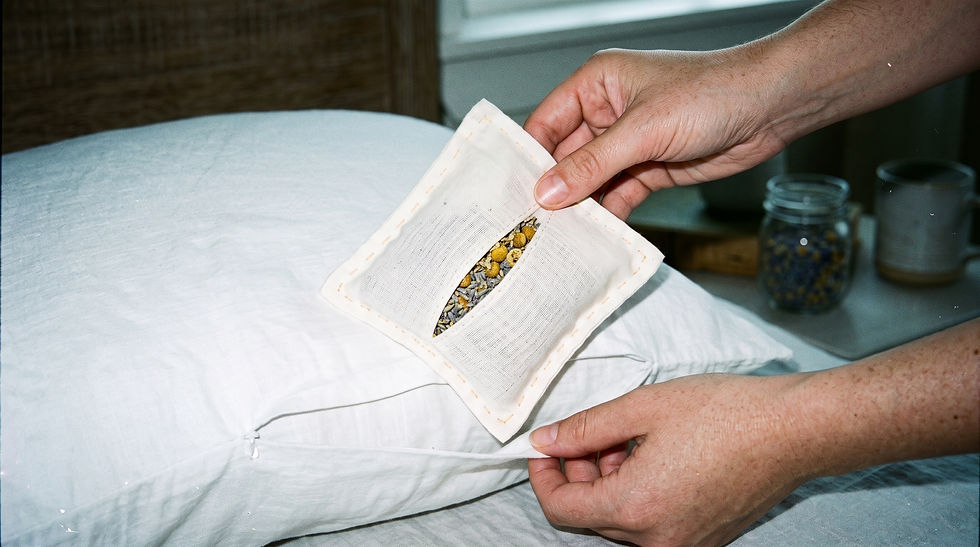
Sew a small cotton sachet, about 10cm by 10cm, and fill it loosely with dried chamomile flowers mixed with dried lavender. Tuck it inside your pillowcase. The scent fades after a few months, at which point you just refill it. It's old-fashioned, but people have been doing it for centuries and it costs almost nothing if you're growing both plants.
10. Let some go to seed deliberately
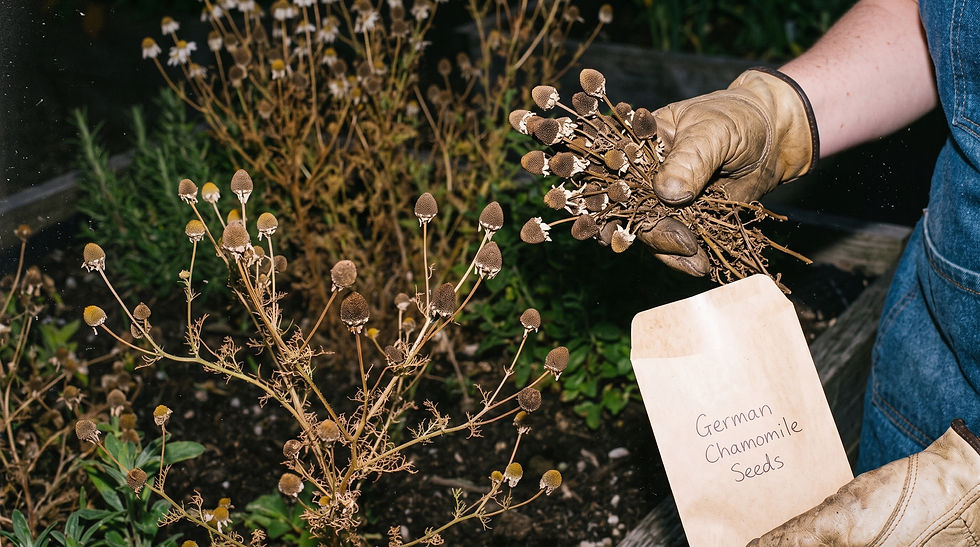
This is the one most growers overlook. Let a few of your chamomile plants flower and then go fully to seed rather than picking them. The seed heads dry on the plant, and you can collect them to sow again next year.
German chamomile self-seeds readily anyway, but collecting seed gives you a bit more control over where it comes up. Shake the dry seed heads into a paper envelope, label it and store it somewhere cool and dry over winter.
A note on which chamomile you're actually growing
It does matter slightly. German chamomile is the one most commonly used in herbal preparations, including everything in this list. Roman chamomile smells sweeter and is lovely in a garden, but it's less commonly used medicinally and the flavour of the tea is more bitter.
If you bought seeds or plants labelled simply "chamomile" without a species name, it's most likely German. You can tell them apart quite easily: German chamomile grows taller (up to 60cm), has a hollow, cone-shaped yellow centre, and a stronger medicinal scent.
Roman chamomile stays low, spreads by runners, and the yellow centre is solid rather than hollow.
Both are worth growing.


Comments